
Home Staging vs Virtual Staging: Why Real Staging Wins
Virtual staging sells the photo. Real home staging sells the house. Learn why real staging creates the feeling that gets buyers to write the offer.
HOME STAGINGREAL ESTATE TIPS
Alesha Oppatt
4/21/20264 min read
Home Staging vs Virtual Staging: Why Real Staging Wins When Buyers Walk In
Virtual staging might get buyers to click. Real staging is what gets them to write the offer.
That is the difference in one line.
If you are deciding between virtual staging and real home staging for your listing, this post breaks it down. You will see what each one does, where each one falls short, and why real staging is the only version that delivers on the photo promise.
What Is Virtual Staging?
Virtual staging is when a designer digitally drops furniture, rugs, and art into a photo of an empty room. The photo looks styled. The actual home is still empty.
It is fast and cheap. A company can usually turn it around in 24 to 48 hours for a few hundred dollars per photo.
But here is the catch. The house is still empty when buyers walk in.
What Is Real Home Staging?
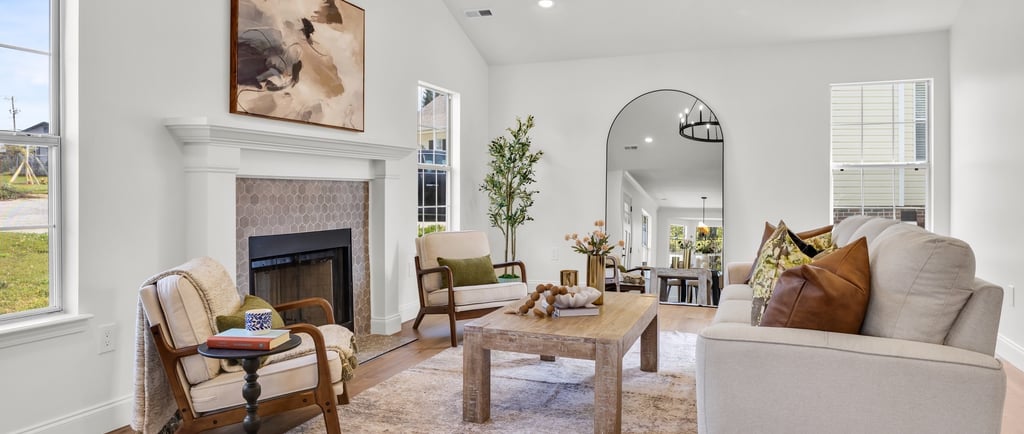
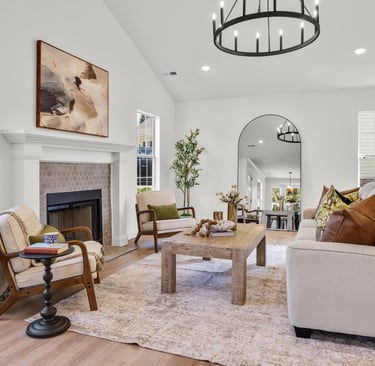
Real home staging brings actual furniture, art, lamps, rugs, and décor into the home. A trained stager designs each room to match the home's size, style, and buyer profile.
The listing photos are real. The home shows beautifully online. And when buyers walk through the door, they feel everything the photos promised.
Staging House specializes in full-service vacant home staging across Upstate South Carolina.
The Real Difference: The "I Want to Live Here" Feeling
Buyers decide with emotion first and logic second.
When they scroll listings online, they click on the one that looks like a home they want. Virtual staging can pull them in. That part works.
But the moment they step inside an empty house, that feeling dies. Their eyes dart to flaws. The room feels cold. They cannot picture their life there. They picture leaving.
Real staging keeps the feeling alive from screen to showing.
● The sofa they saw in the photo is really there
● The art is on the wall
● The bed is made
● The lamps glow warm
● The rug grounds the room
Every sense tells them, "you belong here." That feeling is what turns a showing into an offer.
Where Virtual Staging Falls Short
Virtual staging has its place, but it has real limits.
1. The house still feels empty in person.
Photos create expectations. An empty room after a styled photo is a letdown. Some buyers feel misled.
2. It hides flaws that photos cannot fake.
Cold air, echo, small rooms, awkward layouts, dated fixtures. Buyers feel these the moment they walk in.
3. It can feel deceptive.
Many MLS systems now require virtual staging to be disclosed. When buyers see the label, trust can drop before the showing even starts.
4. It does not help with traffic flow.
Real staging shows how a room lives. Virtual staging shows how a room looks. Buyers need both.
5. It cannot answer "will my stuff fit?"
A real sofa, bed, or dining table in the room gives buyers a true sense of scale. Virtual furniture cannot.
Where Real Home Staging Wins
Real staging does five things virtual cannot.
1. Creates a real in-person experience. The home shows as beautifully as the photos.
2. Shows true scale and function. Buyers see how they will live in the space.
3. Warms up cold, empty rooms. Soft textures, lamps, and layered beds make photos and showings feel inviting.
4. Helps buyers commit emotionally. Real staging builds that gut feeling that drives offers.
5. Supports your listing price. A home that feels finished justifies its price. An empty one does not.
Staged listings usually sell faster and for stronger offers. The NAR 2023 Profile of Home Staging found that 48% of sellers' agents said staging decreased time on the market, and 20% of buyers' agents said it raised offers by 1% to 5%.
The Cost Comparison
Virtual staging looks cheaper on paper. A few hundred dollars per photo. Real staging costs more.
But look at what you are paying for.
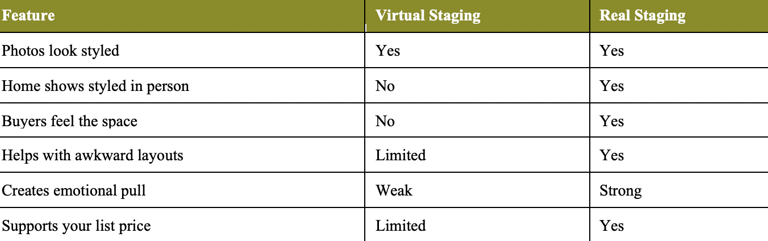
When a staged home sells faster or for more, real staging pays for itself. Virtual staging rarely does.
When Virtual Staging Might Make Sense
To be fair, virtual staging has a few narrow use cases:
● Very short-term rentals or ultra-low-budget flips
● Listings with tight photo deadlines and no time for real staging
● Supplemental photos on an already staged home (like showing different décor styles)
For most vacant homes listed for sale? Real staging wins.
Frequently Asked Questions
Is virtual staging worth it?
Sometimes. Virtual staging helps a listing get clicks, but it cannot match the in-person experience of real staging. For most vacant listings, real staging produces stronger results.
Do buyers know when a listing is virtually staged?
Yes. Most MLS systems require disclosure. Buyers often notice too, especially if the furniture looks off scale or too perfect.
Will real staging really help my home sell faster?
In most cases, yes. The NAR 2023 Profile of Home Staging found 48% of sellers' agents said staging cut days on market.
How much does real home staging cost?
Most Upstate SC vacant home staging projects range from $1,800 to $4,500 based on home size and rooms staged. Staging House gives every client a custom quote.
Ready to Stage for Real?
Your listing deserves more than a styled photo. It deserves a full experience that carries from screen to showing.
Call 864.367.5239 or email sales@staginghousesc.com to book your next vacant home staging project with Staging House.
Contact
Ready to stage your home for sale?
sales@staginghousesc.com
864-367-5239
© 2026. All rights reserved.